Cold garages, workshops, and storage areas need moisture control that keeps working when temperatures drop. These desiccant garage dehumidifiers use adsorption technology, rechargeable silica gel, or passive moisture absorption to help protect tools, vehicles, and stored belongings.
Our roundup covers electric rotary units, compact continuous-drain models, and reusable desiccant packs so you can match the solution to your garage’s size, temperature, and available power.
Best 10 Desiccant Garage Dehumidifiers Picks for 2026
Top Winter Pick
AEOCKY X1-Pro Rotary Desiccant Dehumidifier

- Cold-rated operation from 34°F to 95°F
- Up to 10 pints per day in lab conditions
- Sleep Mode rated at 25 dB
Best For: Cold garages and compact spaces needing quiet moisture control
Best Passive Option
DampRid Fragrance-Free Moisture Absorber Buckets

- Two fragrance-free moisture absorber buckets
- No electricity or powered airflow required
- Useful for small to medium damp spaces
Best For: Localized moisture control in closets, RVs, and small garages
Best for Unheated Garages
Eva-Dry EDV-4000H Rotary Dehumidifier

- Works in temperatures down to 34°F
- Covers spaces up to 444 square feet
- Offers tank or continuous-drain operation
Best For: Unheated garages, crawl spaces, and compact service areas
Best for Storage Bins
Rechargeable 100g Desiccant Packs, 6-Pack

- Six compact, individually wrapped moisture packs
- Blue-to-pink indicator shows when to recharge
- Reusable with microwave heating below 210°F
Best For: Storage bins, closets, cars, and other enclosed spaces
Best Cold-Weather Pick

- Works in temperatures as low as 32°F
- Up to 75 oz. daily moisture removal under stated conditions
- Includes continuous drainage and automatic shutoff protection
Best For: Cold garages, basements, and larger home spaces
Best for Everyday Use
Wisedry Rechargeable Silica Gel Bags

- Includes two reusable 500g silica gel bags
- Absorbs up to 150g per bag under the listed rating
- Reactivates in about 10–16 minutes
Best For: Localized moisture control in storage areas, vehicles, and small enclosed spaces
Best Compact Powered Unit
Ivation 13-Pint Desiccant Dehumidifier
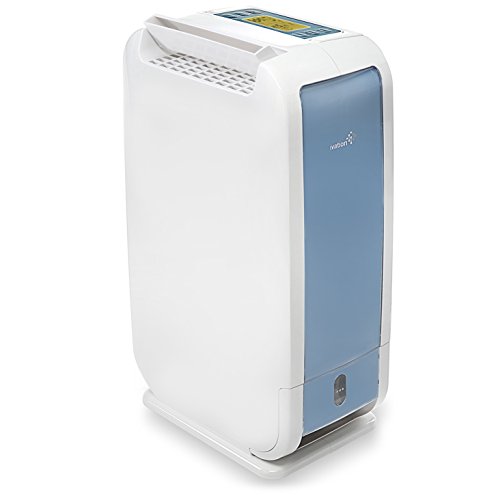
- Covers spaces up to 270 square feet
- Removes up to 13 pints per day under stated conditions
- Offers a tank, continuous drain, digital controls, and auto-restart
Best For: Small garages, crawlspaces, attics, and other cooler areas
Reusable Garage Moisture Bags
4-Pack 500g Silica Gel Dehumidifiers
- Four reusable 500g moisture-absorbing bags
- Each bag absorbs up to 150g of moisture
- Microwave or oven reactivation
Best For: Portable, electricity-free moisture control in garages and storage areas
Powered Cold-Weather Garage Dehumidifier
19-Pint Compact Desiccant Dehumidifier

- Removes up to 19 pints per day
- Designed for spaces up to 410 square feet
- Includes hose connection for continuous drainage
Best For: Small enclosed garages needing powered, continuous moisture removal
Visible Moisture Indicator Packs
Two 500g Rechargeable Silica Gel Packs

- Transparent windows show moisture saturation
- Two reusable 500g silica gel packs
- Microwave and oven reactivation options
Best For: Targeted garage and storage protection with visible moisture monitoring
Top Winter Pick – AEOCKY X1-Pro Rotary Desiccant Dehumidifier
For cold garages, basements, and other compact spaces, the AEOCKY X1-Pro is a powerful choice among desiccant garage dehumidifiers. Its heated zeolite rotor is designed to keep extracting moisture without the coil icing associated with compressor models, while Sleep Mode lowers noise to 25 dB.
Best For: Cold-weather garages, basements, cabins, RVs, closets, and laundry rooms needing quiet, high-output moisture control.
Pros:
- Works from 34°F to 95°F without refrigerant coils that can ice up.
- Rated for up to 10 pints per day in laboratory conditions and about 5 pints per day in specified real-world conditions.
- Sleep Mode operates at a claimed 25 dB, with maximum-output testing at 39 dB from 3 feet.
- Compact rotary desiccant design avoids the performance limitations of traditional Peltier units.
Cons:
- Its 340W heated system may add some warmth to the surrounding space.
- A slight warmth or scent can occur during first use or after long storage, so ventilation may be helpful.
- Collected water may freeze below 34°F and affect use.
The X1-Pro stands out when winter performance and quiet operation matter more than ultra-low energy use. It is best suited to smaller spaces rather than large garages, and buyers should account for the heat and initial odor noted by the manufacturer.
Best Passive Option – DampRid Fragrance-Free Moisture Absorber Buckets
DampRid Hi-Capacity Fragrance Free Absorber Bucket, 2 lb. 15.5 oz. with Detection Strip, 2 Pack
Check Price On AmazonFor small damp areas where powered equipment is unnecessary, this two-pack of DampRid buckets offers a simple alternative to electric desiccant garage dehumidifiers. The fragrance-free granules attract and trap excess moisture and can be placed on a shelf or floor.
Best For: Closets, small garages, basements, bathrooms, RVs, and other residential spaces needing passive, unscented moisture control.
Pros:
- Fragrance-free formula is suitable for scent-sensitive environments.
- Bucket design is easy to place in multiple rooms or on floors and shelves.
- Requires no electricity, compressor, or fan.
- Supplied as a two-pack for multi-room coverage.
Cons:
- Passive granules are intended for small to medium spaces rather than whole-garage drying.
- Does not provide powered airflow or the adjustable operation of an electric dehumidifier.
- Collected moisture and spent granules require monitoring and replacement.
DampRid is a practical, low-maintenance choice for localized dampness, especially where noise and electricity use are concerns. For a persistently humid or larger garage, a powered unit will offer more active moisture removal.
Best for Unheated Garages – Eva-Dry EDV-4000H Rotary Dehumidifier
The Eva-Dry EDV-4000H is designed for unheated garages, crawl spaces, basements, and cabins where compressor models may struggle. Its rotary desiccant system is cold-rated to 34°F, covers up to 444 square feet, and offers continuous drainage as well as a 2-liter tank.
Best For: Unheated garages and service areas up to 444 square feet where cold-weather operation, compact dimensions, and drainage flexibility are priorities.
Pros:
- Rotary desiccant technology works in temperatures as low as 34°F.
- Compact 7-inch-deep design and 13-pound weight fit tight crawl spaces and access areas.
- Provides a 2-liter tank with auto-shutoff plus a continuous-drain option.
- Includes two fan speeds, three preset humidity levels, a clothes-drying setting, and an optional ionizer.
Cons:
- Coverage is limited to 444 square feet, so it may not suit a large garage.
- The 2-liter tank may require regular emptying without a drain hose.
- Only a 1-year limited manufacturer warranty is specified.
With cold-rated operation and a narrow footprint, the EDV-4000H is a strong fit for garages where space and winter temperatures make conventional units inconvenient. Its continuous-drain capability is especially useful for unattended operation near a suitable floor drain.
Best for Storage Bins – Rechargeable 100g Desiccant Packs, 6-Pack
These compact rechargeable bags are intended for enclosed storage rather than whole-room drying, making them a useful supplement to desiccant garage dehumidifiers. Each 100-gram pack has a color-changing indicator window, and the six individually wrapped packs can be placed in closets, cars, storage bins, or other confined areas.
Best For: Storage bins, closets, cars, cabinets, and small enclosed spaces where portable, non-powered moisture absorption is needed.
Pros:
- Six lightweight, individually packaged 100-gram packs are easy to distribute.
- Color indicator changes from blue to light pink when recharging is needed.
- Can be reheated and reused, with microwave heating recommended below 210°F.
- Compact 5.5-by-3.1-inch size fits many storage areas.
Cons:
- Designed for enclosed storage areas, not active dehumidification of an entire garage.
- Manufacturer recommends replacement after about 10 uses for better absorption.
- Requires monitoring and reheating when the indicator changes color.
These packs are best viewed as targeted moisture protection for stored items, not as a substitute for a powered garage dehumidifier. The indicator window makes maintenance straightforward, while the reusable design helps reduce disposable absorber use.
Best Cold-Weather Pick – Rotary Desiccant Dehumidifier
For garages that stay chilly, this rotary desiccant dehumidifier is designed to keep extracting moisture at temperatures as low as 32°F. It uses an absorbent wheel rather than compressor-based cooling, releases warm, dry air, and includes a digital humidity display for easier monitoring.
Best For: Cold garages, basements, and homes needing coverage from 270 to 2,200 square feet.
Pros:
- Maintains dehumidification performance down to 32°F.
- Removes up to 75 ounces of moisture per day under stated test conditions.
- Offers an 85-ounce tank, continuous drainage with the included hose, and automatic shutoff protection.
- Runs below 40 decibels and includes a washable filter.
Cons:
- The 75-ounce daily extraction figure is based on 86°F and 80% relative humidity.
- Its 9.8-by-6.4-by-15.7-inch footprint may still require deliberate placement in a crowded garage.
- The timer is limited to 2-, 4-, or 6-hour settings.
This is the most versatile option here for a cold garage, especially when compressor models may frost or lose efficiency. Its warm-air output, drainage options, and safety shutoffs make it practical for longer unattended operation.
Best for Everyday Use – Wisedry Rechargeable Silica Gel Bags
These reusable silica gel bags are a compact alternative to powered desiccant garage dehumidifiers when you need localized moisture control. The two 500-gram bags can absorb up to 150 grams each under the listed rating, then be reactivated in a microwave or oven.
Best For: Cars, tool storage, cabinets, gun safes, small garages, RVs, boats, and other enclosed areas.
Pros:
- Two 500-gram bags provide portable, electricity-free moisture absorption.
- Each bag can absorb up to 150 grams, with a stated maximum of 180 grams.
- Can be reused more than 10 times when recharged according to the instructions.
- Recharge typically takes about 10–16 minutes depending on microwave power.
Cons:
- They require removal and recharging rather than continuous automatic operation.
- The bags are intended for localized or enclosed spaces, not whole-garage air circulation.
- The instructions say not to recharge a bag below 650 grams, so weighing is part of maintenance.
Choose these when you want simple, reusable moisture absorption without adding another continuously powered appliance. They are especially useful around stored tools, vehicles, closets, and other confined garage areas.
Best Compact Powered Unit – Ivation 13-Pint Desiccant Dehumidifier
The Ivation is a compact powered choice among desiccant garage dehumidifiers, removing up to 13 pints per day at 68°F and 60% relative humidity. Its rotor technology gently warms the air, and the unit is rated for operation from 33°F to 104°F—useful for smaller, cooler spaces.
Best For: Garages, crawlspaces, attics, bathrooms, and closets up to 270 square feet.
Pros:
- Desiccant rotor operation is suited to colder seasons when compressors can struggle.
- Removes up to 13 pints of moisture per day under the stated test conditions.
- Provides a removable 3.8-pint reservoir or continuous drainage with the included hose.
- Includes a digital control panel, sleep mode, auto-restart, timer, and tilt/overflow shutoff.
Cons:
- Coverage is limited to spaces up to 270 square feet.
- Its 470-watt high setting uses more power than a passive moisture absorber.
- The unit weighs 14 pounds, making it less convenient to move frequently.
For a small garage or adjacent utility area, this model balances cold-weather performance with useful controls and drainage flexibility. Confirm your space is within the 270-square-foot rating before choosing it for garage-wide use.
Reusable Garage Moisture Bags – 4-Pack 500g Silica Gel Dehumidifiers
For targeted moisture control, these reusable desiccant garage dehumidifiers provide four 500g silica gel bags that can help reduce dampness and foggy windows without electricity. Each bag can absorb up to 150g of moisture and is designed for garages, storage areas, tool shops, basements, and vehicles.
Best For: Garages and storage spaces needing portable, reusable moisture absorbers.
Pros:
- Four 500g bags provide flexible placement around a garage or storage area.
- Each bag can absorb up to 150g of moisture.
- Microwave or oven reactivation takes about 10–16 minutes, according to the instructions.
- Reusable more than 10 times when recharged properly.
Cons:
- Requires manual weighing and reactivation when saturated.
- Does not provide continuous powered dehumidification or automatic humidity control.
This is a practical low-maintenance option for localized moisture problems, especially where running an electrical dehumidifier is inconvenient. Its four-bag format also makes it easy to distribute absorption across multiple areas.
Powered Cold-Weather Garage Dehumidifier – 19-Pint Compact Desiccant Dehumidifier
This Ivation model is a powered desiccant garage dehumidifier for enclosed spaces up to 410 square feet. Its rotor-based system removes moisture, odors, and mold while warming ambient air, making it suited to cooler garages, attics, crawlspaces, and other small areas.
Best For: Small garages and utility spaces where continuous powered moisture removal and drainage are useful.
Pros:
- Rated to remove up to 19 pints of moisture per day.
- Works across temperatures from 33°F to 104°F and warms ambient air.
- Includes a reservoir and hose connection for continuous drainage.
- Offers adjustable humidity, fan speed, timer, sleep mode, and vent swing controls.
Cons:
- Designed for spaces up to 410 square feet, so it may not suit large garages.
- Requires electrical power and has a relatively tall 19.5-inch profile.
Compared with passive silica gel bags, this unit is the stronger choice for ongoing moisture management in a small enclosed garage. The hose option can reduce the need to empty its reservoir, while the carry handle supports occasional relocation.
Visible Moisture Indicator Packs – Two 500g Rechargeable Silica Gel Packs
These rechargeable desiccant garage dehumidifiers use two 500g silica gel packs with transparent windows that show when moisture absorption is nearing saturation. They are suited to garages, vehicles, closets, basements, safes, and other storage spaces where portable, reusable protection is preferred.
Best For: Users who want visual saturation monitoring and reusable moisture control for valuables or storage areas.
Pros:
- Transparent windows make moisture absorption easy to monitor.
- Orange-to-light-green color change indicates reactivation is nearing.
- Each 500g pack can be reactivated in a microwave or oven.
- Silica gel is described as non-toxic and free of harmful chemical additives.
Cons:
- Only two packs are included, providing less coverage than a four-pack.
- Microwave reactivation requires low power and careful temperature limits to protect the window.
- Requires manual reactivation rather than automatic operation.
The visible indicator is the main advantage for buyers who do not want to guess when a desiccant pack needs recharging. These packs are especially useful for targeted protection around tools, firearms, vehicles, and stored belongings.
How We Picked the Best Desiccant Garage Dehumidifiers
We organized these products around the conditions that matter most in garages: low-temperature performance, coverage, moisture capacity, maintenance, noise, portability, and operating cost. The selection includes powered rotary desiccant dehumidifiers for ongoing humidity control, passive absorbers for small enclosed areas, and rechargeable silica gel packs for vehicles, cabinets, safes, and storage bins.
Because product specifications and real-world performance can vary by temperature and humidity, check the manufacturer’s rated coverage and operating instructions before buying. A unit designed for a crawl space or small room may not be suitable for an uninsulated, full-size garage.
Quick Comparison
| Best For | Recommended Type | Why It Fits |
|---|---|---|
| Cold or winter garages | Rotary desiccant dehumidifier | Desiccant technology generally performs better than compressor units in cooler conditions. |
| Large, frequently used garages | Higher-coverage electric unit | Provides active, continuous moisture removal with less frequent replacement. |
| Cars, toolboxes, and gun safes | Rechargeable silica gel packs | Compact, reusable, and easy to place in enclosed spaces. |
| Unpowered storage areas | Passive absorber bucket | Requires no electricity, though it needs periodic replacement and careful handling. |
Key Buying Factors for Desiccant Garage Dehumidifiers
Temperature and Garage Conditions
Choose a desiccant model if your garage regularly becomes cold, especially during winter. Rotary units are usually the strongest choice for active control, while passive packs work best in sealed or nearly sealed compartments.
Coverage and Moisture Load
Match the rated square footage to the actual space, and allow extra capacity for an uninsulated garage, frequent door opening, wet vehicles, or visible condensation. Small-area models are better suited to enclosed sections than open garages.
Drainage and Maintenance
Electric units may collect water in a tank or support continuous drainage. A hose connection is useful when the dehumidifier will run unattended. Rechargeable packs avoid liquid tanks but must be dried or reactivated according to the instructions.
Noise, Power, and Operating Cost
Fans and heaters make powered units more effective but can add noise and electricity use. For occasional moisture control, reusable packs may cost less to operate. For persistent humidity, an electric unit is typically more convenient.
Who Should Buy Which Desiccant Garage Dehumidifiers?
Buy a higher-capacity rotary unit for a damp, full-size garage or workshop where humidity is an ongoing problem. Choose a compact electric model for a small enclosed garage, attic, crawl space, or utility area. Rechargeable silica gel packs are the practical option for cars, cabinets, safes, and tool storage. Select a passive absorber when you need simple, electricity-free protection in a confined area and can replace the absorbent as needed.